/Prime-Care-Technologies-Logo.png?width=191&height=55&name=Prime-Care-Technologies-Logo.png)

/PCT-Trans.png)
A Major Health Care IT Paradigm Shift
“Best Practices” in the old days – paper pushing.
Historically, health care in general and long term care specifically, has been intensively paper based - forms, spindles, chart tables, racks, and binders. Documentation was (and still is) the name of the game and pushing paper was the only way. Even regulatory enforcement surveys were based on paper compliance with bedside visits to verify the documentation. Paper-based documentation consumed a lot of trees and filled a lot of storage files and storage units.
On the upside, a paper-based system never froze up, crashed, or hung. The staff never had to worry about connectivity, rebooting the computer, unplugging and plugging a cable, or finding a wireless access point and rebooting it. They just needed to make sure they had a pen with the right color.
 “Best Practices” today – Getting past the paper paradigm
Only recently has long term care demonstrated a grudging willingness to adopt IT as the way to communicate and document. Narrow margins, suspect IT promises, and resistance to change have contributed to this lethargy. Further, what technology has done to society it has done many-fold to LTC. Staffers have discovered that the promises of “increased productivity” have in reality resulted in increased demands.
However, the outside pressures of increased competition, a shrinking skilled labor pool, a younger, more computer-savvy cadre of care givers, more restrictive regulations and reimbursement, and opportunities posed by HIEs and ACOs have become the incentives for a more rapid LTC IT adoption. Providers across the country have begun to realize tangible benefits to their operations through IT. For example, with the advent of real-time reporting and Business Intelligence, such as PCT’s primeVIEW digital dashboard, health care executives are able to identify and respond to problems and opportunities quickly. This results in real savings, expanded market penetrations, improved bottom lines, increased efficiencies, and better resident care.
Consider this, a recent LTC provider’s initiative capitalized on the flexibility and accessibility of its company Intranet and focused on assessing and improving weekly weight and skin condition assessments. Recording their assessments electronically yielded a significant reduction in staff documentation time; this means more time face-to-face time working with residents and less time pushing a pen.
What’s the impact that IT can have on the facilities and their residents?
It means an improvement in the quality of life and care for residents. For providers it means, among many benefits, a healthier bottom line, reduced DSO through automated claims management, reduced procurement spend through procurement automation, a stronger competitive edge over those facilities which are IT resistant, and being well situated when working with other providers along the continuum of care.
Questions:
- How has IT helped your operation?
- If you have embraced IT, how has it benefitted your operation and the services you deliver?
 Prime Care Technologies wishes you a Happy New Year. I once had a boss whose mantra was, “All problems can be viewed as opportunities.” That being the case, then 2012 should be an amazing year of opportunities for business in general and long term care specifically. I encourage you to look at all of your “opportunities” and to explore how IT can help you convert those opportunities into gains.
 Over the last several months, this blog has covered topics focusing on various aspects of IT and its impact on long term care. In our
 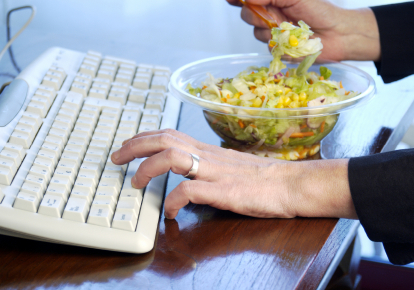 A recent article in the Nashville Post cited a lawsuit filed against a local nursing home by a former employee over lunch break pay policies. But, what does this have to do with IT?
 I know it’s late in the day and many of you are already heading to your turkey feast destination or making last-minute preparations, but I think expressing gratitude is never too late - or too early for that matter. First, if not for the vision, talent, dedication, and hard work of so many, we would not enjoy the explosion of opportunities that information technology offers us. Whether it’s for entertainment, checking on one’s health, mining data, checking on the weather or road conditions, tracking finances, operating a business, promoting ideas, products, and services, or just meeting or reconnecting with friends, IT is everywhere. Some may argue that IT may have complicated our lives, but in the long run, our lives, our play, our work, even our worship have been positively impacted and enriched. For this, we should be very grateful.
/Prime-Care-Technologies-Logo.png?width=122&height=35&name=Prime-Care-Technologies-Logo.png "Prime-Care-Technologies-Logo")