/Prime-Care-Technologies-Logo.png?width=191&height=55&name=Prime-Care-Technologies-Logo.png)

/PCT-Trans.png)
 Data mining represents wealth, a wealth of opportunity, action, and success. Directly put, data mining (the process of centralized data management and retrieval) helps LTC providers find hidden treasures of knowledge, not just data. Just as rare gems or precious minerals are only valuable when processed from the ore that is unearthed, so too is knowledge when refined from countless bytes of data. Refined data transformed into information becomes knowledge and knowledge – the power to act. Data mining, therefore, helps executives discover what is happening now, track trends, anticipate with some accuracy what may happen in the future, and explore the strengths of possible actions.
In real terms, providers today have the ability to mine their own data and, yes, to share the data and knowledge with others at practically a simple click of a button. They can view and act on Key Performance Indicators (KPIs) in real-time* and, based on the information collected, take action or create their own predictive models or what-if scenarios. Some vital KPIs, among others, include:
- Census Information, such as actual-to-budget census by payer type
- Admissions and Discharges trending, including admissions sources and discharge destinations, lengths of stay, and readmissions to hospitals
- Labor information, including actual-to-budget as well as actual-to-flex budget (by which providers can determine staffing needs based on the actual census)
- A review of overtime hours so that providers can schedule staff and minimize overtime pay
- Cash and accounts receivable comparing actual payments to targeted collection dates by payer, also cash trending by payer, reconciliation of collections to bank statements, DSO, periodic aging reports
- Regulatory reporting, such as the 671 report, detailed discharge reports, reports for uploading to other systems, such as AHCA’s Trend Tracker
- Clinical SNF and assisted living KPIs, including relevant trending
The strength of data mining for operators of multiple facilities lies in its ability to drill down from a consolidated dashboard view configured by the provider to the region, facility, department, individual employee, or resident. Administration of such a system is provider driven to determine who shall have access to what within the system.
A viable data mining system is responsive to the ever-changing long term care environment, such as data and information-hungry ACOs, remaining top of mind for hospital discharge planners by maintaining hospital readmissions at an acceptable level, involvement in policy-determining studies, or meeting HIT requirements (Stage 2 meaningful use) to be eligible for the federal electronic health-record financial incentive program.
Data mining is more than a curiosity; it is the Mother Lode of vital information in today’s health care environment. Talk to us during the AHCA/NCAL 63rd Annual Convention and Expo, booth #1317, or during the 2012 LeadingAge Annual Meeting and Exposition, booth #530,to discover for yourself how providers like you have benefited in real dollars from data mining using our primeVIEW business intelligence tool.
*Let’s talk about “real-time” for a moment. The term, real-time, can mean “without perceivable delay.” So, in this case, the data is processed as soon as it is received. How often is the data pulled? That is directly driven by the provider’s need to know. You could say that “real-time” reporting is driven by the need for “real-time” decision making. For example, labor hours require perhaps a greater frequency of reporting during a given day than collections or census. Our primeVIEW customers determine data pull frequency.
 Leaders who are really successful are those who are accountable and hold others accountable. Over the years I have served in several leadership positions in this amazing industry/profession, we call Long Term Care, and have observed many who live the principle of accountability. The more precise the terms of the accountability, the more effective the leader and the team he or she leads. You may think it odd that in a technology blog, you would read about leadership, but be patient. There is an IT-related point to this.
 Rendering an accounting has been a periodic, often formal event. But the nature of that “rendering” has changed. In the past, when all things were paper based, either the leader prepared or relied on someone else to prepare documentation/reports targeting specific responsibilities – a time-consuming and laborious process. What’s more, it was very much after the fact. As I sat in on monthly P&L reviews or periodic performance reviews, the matters discussed were usually a “day late and a dollar short.” I like the adage that I heard Dr. Wayne Dyer once cite, “I can’t should’ve anything.”
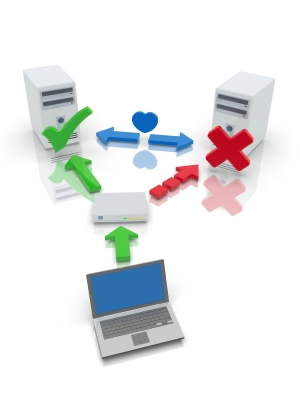 According to experts, disaster recovery (DR) is how a business restarts itself following a disruptive incident that is natural, man-made, or a systems failure. On the other hand, business continuity implies a more comprehensive consideration of how your business continues to operate not only following a disaster, but also the departure of a key member of your management team or department head or any other incident or event which could interfere with daily operations.
/Prime-Care-Technologies-Logo.png?width=122&height=35&name=Prime-Care-Technologies-Logo.png "Prime-Care-Technologies-Logo")